
"coffee inspection"
3000 article(s) found

Establishment of Coffee quality Inspection system in Yunnan
On March 26, in Yunnan Province, the largest coffee producing area in China, local coffee companies are registering coffee bases in an attempt to establish a quality traceability system. Scan the bar code to find out the planting area, altitude, grower, primary processing plant of each cup of coffee. It is understood that this is also an important measure for Yunnan to promote the fine cultivation of coffee and create boutique coffee. Located in the west of China

Coffee Import process / Program process imported Coffee producing area China Coffee Network
1: before delivery, the customer provides the product label design draft picture, composition table, translation to review the product. 2: sign the contract (and provide relevant company documents and contact information for the record). The company arranges one-to-one customer service to follow up the whole import docking service. 3: import product label pre-examination and filing (one-stop 100% one-time successful record). 4: customers provide foreign contracts and issues in advance

The country's first professional testing laboratory for coffee products has set up Pu'er coffee testing laboratory.
AQSIQ approved the establishment of the National Coffee testing key Laboratory (Pu'er) on December 2 through careful examination and acceptance. So far, the only national coffee product professional testing laboratory was born in Pu'er. For a long time, since coffee products have no industry standards, no ministerial standards, and no national standards, the trading parties only rely on samples and purchases.

Introduction to the taste of the quality producing area of Sidamoto Lion King Coffee Bean Flavor description
Sidamomo Lion King Coffee Bean Flavor description method Coffee is the most important export cash crop and the main source of foreign exchange income in Ethiopia. Ethiopia's coffee exports account for about 3% of the world market, making it the eighth largest coffee exporter in the world. Coffee exports increased steadily from 58000 tons in 1990 to 110 tons in 1995-1996.
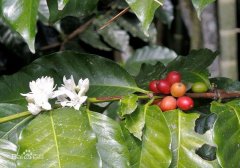
Coffee graded Ethiopian coffee coffee shop
Boutique coffee (specialty coffee) is also called specialty coffee selection coffee. It refers to coffee made from a small number of raw beans with excellent taste grown in an ideal geographical environment. Depending on the special soil and climatic conditions in which they grow, they have outstanding flavor. After strict selection and classification, this kind of coffee is hard in texture, rich in taste and stylish.

The raw coffee beans were destroyed after they were found out.
Communication of professional baristas Please follow the coffee workshop (official Wechat account cafe_style) in the imported coffee beans found that there is a box of raw coffee beans want to muddle through, was found to carry out destruction treatment. Recently, the reporter learned from the Liaoning entry-exit Inspection and Quarantine Bureau that a box of raw coffee beans was found in a batch of imported Mexican coffee beans by airmail. Raw coffee beans have the ability to reproduce, once in

A brief introduction to the Variety characteristics of the Flavor description method of Ethiopian Sidamomo Lion King Coffee
The export rating is marked by simple numbers, with the best washed coffee at level 5 and the best sun-cured coffee at level 4. After grading, mark the place of origin and then export. Exports are usually paid by letter of credit, which can not only reduce the risk of foreign exchange collection for exporters, but also give quality assurance to importers. Coffee is Ethiopia's most important export cash crop and the main source of Ethiopia's foreign exchange earnings.

The number of bacteria on ice cubes in Taiwan's chain beverage and coffee shops exceeds the standard by nearly 100 times.
Communication of professional baristas Please follow the coffee workshop (official Wechat account cafe_style) in hot summer, hand beverage shops can be seen everywhere, which has become the most convenient way to relieve the heat. In order to maintain the hygiene and safety of people's edible drinks, the New Taipei City Health Bureau launched this year's ice (ice) beverage sampling project, and a total of 196 products have been inspected by early July, of which 177 have been inspected.

Every coffee bean needs to be screened, graded and examined.
You should know that 95% of Taiwan's coffee beans come from overseas. During the customs border inspection, the Food and Drug Administration of the Ministry of Health and Fuzhou listed pesticide residues and ochratoxin as coffee bean sampling items. General coffee beans will be graded according to origin, factory height, particle size and so on after processing. Article = Lin Zhengwen every cup of black coffee comes from coffee beans

Professional coffee shop design
1 basic planning (spatial image and scope) on the basis of project budget, economic strength and customer requirements and characteristics, through design direction and restricted elements, the role of basic planning is to determine the design concept, so as to establish a spatial image. It shows conceptual spatial design, such as spatial structure, arrangement, lighting, color and flow planning, to meet functional and aesthetic requirements.

A brief introduction to the characteristics of the country of origin of Ethiopian Bancimaji coffee beans
A brief introduction to the Manor characteristics of the Origin of Ethiopian Bancimaghi Coffee Coffee Harald coffee produced in the southeastern highlands of Ethiopia is a typical Muha coffee with strong aroma; Habesa coffee is mild, full-bodied and sour. Astor coffee is more chocolate and sour. The estate is owned by Gashaw Kinfe Desta and is very close to Geish.

Characteristics of grinding degree of Ethiopian coffee introduction of high-quality coffee beans
Coffee is Ethiopia's most important export cash crop and the main source of Ethiopia's foreign exchange earnings. Ethiopia's coffee exports account for about 3% of the world market, making it the eighth largest coffee exporter in the world. Coffee exports increased steadily from 58000 tons in 1990 to 110000 tons in 1995-1996 and remained at this level in the following years. 2001-2002

Introduction to the planting environment of Ethiopian coffee
Due to different planting methods, coffee can be divided into three types: forest-semi-forest coffee (Forest or semi-forest coffee), courtyard coffee (Garden coffee) and plantation coffee (Plantation coffee). 60% of the coffee belongs to forest-semi-forest coffee. In such a wild coffee forest, pesticides are not used at all, but biological methods are used to control pests. 35%

Introduction to the producing area of characteristic flavor varieties of sun Xidamo Lion King Coffee Bean
The average price in March 2004 was 60.8 cents per pound, an increase of 50% over the price in September 2001. This is great news for Ethiopia, where coffee grading and quality control systems are divided into three levels: producer, regional and national. All coffee is subject to local inspection before leaving the country of origin.

Ethiopian boutique coffee introduces the taste characteristics of Ethiopian coffee Ethiopian coffee
Although the Ethiopian Yirgacheffe coffee is petite, it is gentle and delicate and sweet. As the hometown of coffee, thousands of years of planting history and processing tradition in Ethiopia have created high-quality washed Arabica beans. Light baking has unique sweet aromas of lemon, flowers and honey, soft acidity and citrus flavors, fresh and bright on the palate. Without

A brief introduction to the grinding scale production area of Ethiopian coffee beans by describing the characteristics of taste and flavor
Brief introduction of Ethiopian coffee bean characteristics, taste and flavor description method grinding scale production area Coffee is Ethiopia's most important export cash crop and the main source of Ethiopia's foreign exchange earnings. Ethiopia's coffee exports account for about 3% of the world market, making it the eighth largest coffee exporter in the world. Coffee exports increased steadily from 58000 tons in 1990 to 1995-1996.

Introduction to the Flavor description, Grinding scale and Variety treatment of Ethiopian Coffee
Coffee is Ethiopia's most important export cash crop and the main source of Ethiopia's foreign exchange earnings. Ethiopia's coffee exports account for about 3% of the world market, making it the eighth largest coffee exporter in the world. Coffee exports increased steadily from 58000 tons in 1990 to 110000 tons in 1995-1996 and remained at this level in the following years. 2001-2002
Beijing COSTA Coffee Xidan Juntai Store closed for rectification and investigation by the Ministry of Health
Staff wallets, mobile phones and other personal belongings together with napkins yesterday, this newspaper reported that the reporter undercover the global chain of well-known brands COSTA coffee Xidan Juntai restaurant, found that there are staff in the tableware cleaning pool to rinse mop, wash hair. After the article was reported in the newspaper, the law enforcement personnel of the health supervision department of Xicheng District immediately rushed to the store to carry out law enforcement on the spot. This morning, COSTA coffee

Boutique Coffee introduced by Manors in Sidamo Coffee Bean producing area of Ethiopia
Due to different planting methods, coffee can be divided into three types: forest-semi-forest coffee (Forest or semi-forest coffee), courtyard coffee (Garden coffee) and plantation coffee (Plantation coffee). 60% of the coffee belongs to forest-semi-forest coffee. In such a wild coffee forest, pesticides are not used at all, but biological methods are used to control pests. thirty-five

Ethiopian (mocha) coffee
The geographical environment of Ethiopia is very suitable for coffee growth. Mocha coffee is mainly grown in the southern highlands between 1100 and 2300 meters above sea level. The main coffee producing areas are Harar, Limu, Djimma, Sidamo, Kaffa, Yergacheffe and Wellega.